Key Highlights from the 2025 Financial Reports
Astor Enerji concluded the 2025 fiscal year with a strong performance, successfully managing growth, investment, and financial discipline. The key highlights are as follows:
• Robust Financial Performance: Sales revenue reached 35.3 billion TL, representing a 1.3% increase over the previous year. Net profit grew by 16.6%, reaching 7.67 billion TL.
• Profitability Margins: The company achieved a 36.9% gross profit margin and a 31.46% EBITDA margin. The net profit margin improved to 21.7%.
• Export and Global Footprint: The share of exports in total revenue reached 40%. A significant milestone was the entry into the US market, with contracts totaling $123 million signed by the end of 2025.
• Capacity Expansion: Construction of Phase 1 (Switching Products) and Phase 2 (Conductor) factories reached 95% completion. Decisions for Phase 3 and Phase 4 (High Power Transformer and Mechanical) investments were initiated to significantly boost production MVA capacity.
• R&D Innovation: R&D expenditures exceeded 1 billion TL in 2025. The company maintains 225 completed projects and 53 ongoing initiatives, focusing on high-efficiency energy solutions.
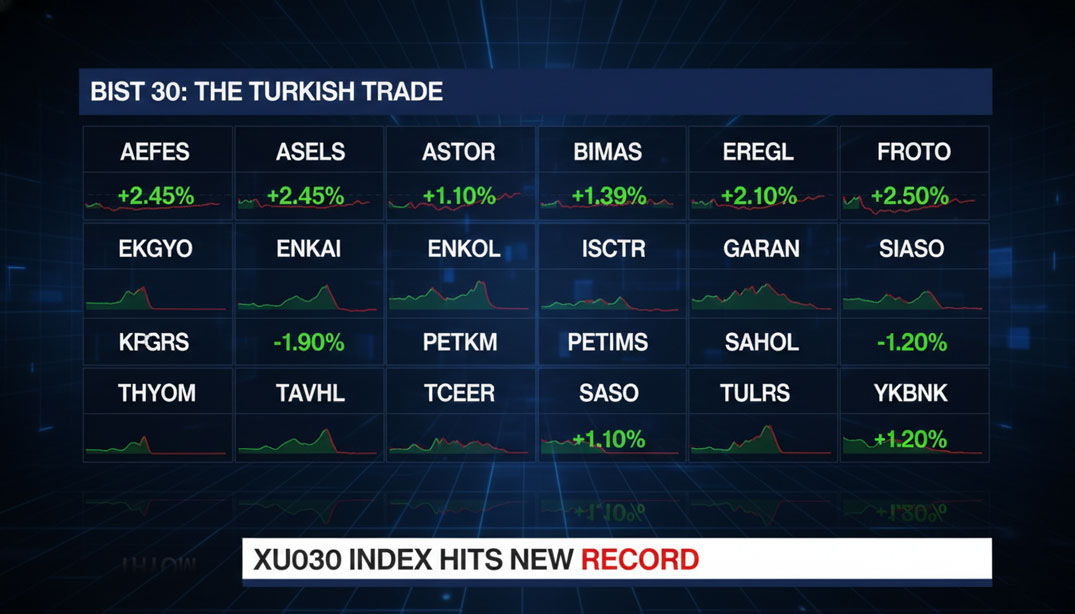
• Strategic Structure: Astor Enerji was included in the BIST Corporate Governance, Dividend, and Dividend 25 indices. Additionally, the “Astor Şarj” electric vehicle charging business is being restructured into a separate subsidiary to increase operational focus.
Beyond the Grid: 5 Surprising Ways Astor Enerji is Powering the AI and Global Energy Revolution
1. Introduction: The Invisible Backbone of the Modern World
We often experience the modern world through the sleek glass of our devices, yet the global energy transition is a story written in steel, copper, and massive electrical loads. As the world pivots toward a “green” future, we are witnessing a profound structural shift: the demand for electricity is outstripping the physical hardware required to move it. This is the “hardware bottleneck” of the 21st century.
Astor Enerji has emerged as a critical player in the global energy value chain, bridging the gap between high-level industrial finance and the cutting-edge technology required to keep the lights on. Operating from 140,000 m² of integrated facilities in Ankara, Turkey, Astor has successfully leveraged its manufacturing cost-advantages and advanced engineering to capture a pivotal role in global infrastructure. With 40% of its revenue now derived from international markets, the company is no longer just a regional manufacturer; it is the invisible backbone enabling the “electrified everything” era.
2. Takeaway #1: The AI Boom is an Energy Boom in Disguise
The meteoric rise of Artificial Intelligence is frequently analyzed through the lens of software and chips, but its physical footprint is defined by unprecedented power density. Data centers (Veri Merkezleri) supporting AI require specialized power and distribution transformers capable of “high-intensity, continuous operations”—loads that traditional grids were never built to sustain.
Astor Enerji has strategically positioned itself in the “high power” segment to capture this demand. By focusing on MVA-based production capacity, the company is providing the high-capacity equipment necessary for the digital world’s expansion. For Astor, the AI revolution is not a distant trend but a present-day driver of Capex and operational strategy.
“Global electricity demand, the accelerating electrification of industries, and investments in data centers supporting artificial intelligence have been the fundamental elements (temel unsurlar) supporting our growth.” — Feridun GEÇGEL, Chairman of the Board
3. Takeaway #2: Crossing the Atlantic—A $123 Million American Debut
One of the most significant strategic pivots in Astor’s 2025 portfolio was its disruptive entry into the United States. As of 31.12.2025, the company signed contracts totaling $123 million with U.S.-based firms. This is not merely a sales milestone; it is a tactical exploitation of a broken global supply chain.
The U.S. grid is currently crippled by a “supply gap” (arz açığı) and aging infrastructure. According to the CEO’s message, the primary strategic moat for Astor in North America is “speed.” While traditional incumbents are struggling with “long delivery times” (uzayan teslim süreleri), Astor’s ability to provide “fast delivery” (hızlı teslim) and high-quality manufacturing has allowed it to capture significant market share in a critical territory where demand is surging from both green energy projects and grid modernization.
4. Takeaway #3: The Billion-Lira Bet on Innovation
Astor’s transition from a manufacturer to a high-tech innovator is evidenced by its relentless innovation cycle. In 2025, the company crossed a massive threshold, allocating over 1 billion TL to Research and Development (R&D). This isn’t just maintenance spending; it is a deliberate move to internalize the production of high-value components.
The “signal within the noise” here is the production of Turkey’s first domestic vacuum tube for 40.5 kV voltage levels, a symbol of high-tech independence that previously required external procurement. By completing 225 R&D projects and launching 58 new initiatives in 2025 alone, Astor is effectively reducing supply chain risks and capturing higher margins through “developing technology and production capabilities” (teknoloji ve üretim kabiliyetlerinin geliştirilmesi).
5. Takeaway #4: Strategic Focus—The “Astor Şarj” Spin-off
In a sophisticated move reflecting “financial discipline” (finansal disiplin), Astor Enerji decided to spin off its EV charging business, Astor Şarj A.Ş., through a “partial division” (kısmi bölünme). While EV charging is a high-growth sector, the board recognized that it requires a different capital structure and management focus than the core transformer business.
CFO Olcay Doğan’s emphasis on “operational efficiency” (operasyonel verimlilik) underscores the logic: by separating the charging network, the company protects the margins of its high-voltage segment and allows the new entity to seek its own funding without diluting the parent company’s resources. This “operational focus” (operasyonel odaklanma) ensures that management remains dedicated to the highest-margin activity—the global grid revolution.
“Resource allocation has been directed toward the company’s core activity areas (ana faaliyet alanlarına odaklanma) to increase operational efficiency in power and distribution transformer production.” — CFO Sentiment on Operational Discipline
6. Takeaway #5: A Meteoric Rise in Industrial Rankings
The scaling capability of Astor is best viewed through its rapid ascent in industrial leaderboards. This growth is backed by aggressive capacity investments, including the Phase 1 through Phase 4 (Faz 1 – Faz 4) expansion projects in the Ankara Sincan region.
Astor’s Rapid Scaling (ISO 500 Ranking):
- 2021: 148th place
- 2023: 87th place
- 2024: 74th place
This is mirrored by a 39-place jump in the TİM (Turkish Exporters Assembly) list to reach 121st overall. These rankings confirm Astor’s evolution from a “Regional Champion” into a “Global Leader,” capable of meeting the stringent ESG expectations and technical requirements of over 100 countries.
7. Conclusion: The Future of the Global Grid
The macro outlook for the energy sector is staggering. According to IEA data, global electricity demand is projected to rise by 4% annually through 2030. To put that in perspective: the world will add the equivalent of Japan’s total annual electricity consumption to the grid every single year for the foreseeable future.
As we move deeper into this “electrified everything” era, the strategic importance of transformer technology—the literal gatekeepers of the grid—will only intensify. Astor Enerji has positioned itself not just as a supplier, but as a primary architect of this new landscape. As the AI revolution demands more power and the global grid struggles to modernize, the ultimate question remains: will the hardware be the bottleneck, or will innovators like Astor provide the speed and scale necessary to keep the future powered?
Astor Enerji 2025 Annual Briefing Report
Executive Summary
Astor Enerji A.Ş. concluded the 2025 fiscal year with a performance characterized by strategic global expansion, significant capacity investments, and a solidified position as a leader in energy technology. A pivotal development in 2025 was the company’s aggressive entry into the North American market, securing $123 million in contracts by year-end. Financed through a combination of strong equity and strategic external funding—including a €54.1 million loan from OeKB—the company is undergoing a multi-phase capacity expansion (Phases 1 through 4) to meet surging global demand driven by electrification, data centers, and grid modernization.
Financial results for 2025 show revenue reaching 35.29 billion TL with a robust net profit of 7.67 billion TL. The company maintains its leadership in Turkey, ranking 74th in the ISO 500, while exporting to over 100 countries. With R&D expenditures exceeding 1 billion TL in 2025, Astor Enerji is prioritizing high-value-added products and vertical integration, particularly in the production of high-power transformers and essential raw materials like insulated conductors.
——————————————————————————–
1. Corporate Profile and Market Position
1.1 Organizational Overview
Founded in 1983, Astor Enerji has evolved from a local distribution transformer manufacturer into a global brand. The company operates from two integrated factories in Ankara covering approximately 140,000 m².
- Product Portfolio: Oil and dry-type distribution transformers, power and special-type transformers, industrial transformers, and medium/high-voltage switching products.
- Global Reach: Exports to over 100 countries, with international sales accounting for 40% of total revenue.
- National Rankings:
- ISO 500: Ranked 74th in 2024 (up from 87th in 2023).
- TIM 1000 (Exporters): Ranked 121st in 2024 (up from 160th in 2023).
- Fortune 500 Turkey: Ranked 110th in 2024.
- Brand Finance: Ranked 37th among “Turkey’s Most Valuable Brands.”
1.2 Capital and Shareholding Structure
As of December 31, 2025, the company’s paid-in capital stands at 998,000,000 TL, with a registered capital ceiling of 4.25 billion TL.
| Shareholder | Share Group | Amount (TL) | Percentage (%) |
| Feridun Geçgel | A & B | 571,350,000 | 57.25 |
| Publicly Traded (BIST) | B | 366,900,000 | 36.76 |
| Astor Holding A.Ş. | B | 59,750,000 | 5.99 |
| Total | 998,000,000 | 100.00 |
Note: Group A shares hold privileges regarding board nominations and voting (5 votes per share).
——————————————————————————–
2. Financial Performance and Analysis
2.1 Key Financial Metrics (2025 vs. 2024)
The company demonstrated stable growth despite global economic volatility.
| Metric | 2024 (TL) | 2025 (TL) | Change (%) |
| Revenue (Hasılat) | 34,848,864,657 | 35,290,767,390 | +1.3% |
| FAVÖK (EBITDA) | 10,433,023,689 | 11,102,586,376 | +6.4% |
| Net Profit | 6,577,182,537 | 7,668,909,328 | +16.6% |
| FAVÖK Margin | 29.9% | 31.46% | – |
| Net Profit Margin | 18.9% | 21.7% | – |
2.2 Debt and Asset Position
Total assets grew by 20.4% to reach 50.6 billion TL. Due to massive capital expenditures (Capex) for capacity expansion, the company shifted from a net cash position of 9.04 billion TL in 2024 to a net debt position of 9.9 billion TL in 2025. This transition is framed as a strategic necessity to support long-term growth.
——————————————————————————–
3. Operational and Strategic Developments
3.1 North American Market Entry
A major milestone in 2025 was the execution of contracts totaling $123 million with US-based companies. This region is identified as a critical future growth driver due to aging infrastructure and the need for new grid investments.
3.2 Restructuring and Focused Growth
- Astor Şarj Spinoff: The company initiated a partial demerger to transfer its electric vehicle charging network activities into a 100% subsidiary, “ASTOR ŞARJ A.Ş.” This aims to increase operational focus and transparency.
- Asener Enerji Divestment: On December 29, 2025, the company sold 100% of its shares in Asener Enerji to focus resources back on its core business of transformer and switching product manufacturing.
3.3 Major Contracts and Deliveries
The company successfully completed a portion of its contracts with TEİAŞ (Turkey’s Electricity Transmission Corp), delivering auto-transformers and power transformers worth 1.54 billion TL (including VAT).
——————————————————————————–
4. Investments and Capacity Expansion
Astor Enerji is actively pursuing vertical integration and capacity increases to manage supply chain risks and capture global demand.
4.1 Development Phases
- Phase 1 (Switching Products Factory): Located in Sincan/Ankara, construction is 95% complete. It features 91,436 m² of closed area. Trial production of concrete kiosks has begun.
- Phase 2 (Conductor Factory): A $50 million investment in insulated copper and aluminum conductor production. This facility will provide critical raw materials for transformers internally. Production is expected to begin in Q1 2026.
- Phase 3 & 4 (High Power Factories): Launched in late 2025/early 2026, these focus on high-power transformer and mechanical production to support large-scale international projects.
4.2 Sustainability in Production
The new facilities include an 8.5 MW rooftop Solar Power Plant (GES) and Energy Storage Systems (ESS) with 3 MWh and 10 MWh capacities to power production with renewable energy.
——————————————————————————–
5. Research, Development, and Innovation
R&D is the cornerstone of Astor’s growth strategy. In 2025, R&D spending exceeded 1 billion TL.
- Project Portfolio: 225 projects completed to date (23 TÜBİTAK-supported). Currently, 53 projects are ongoing, with 58 new projects initiated in 2025.
- Intellectual Property: 45 scientific publications (19 international), 4 patent applications, and 2 utility model applications were made in 2025.
- Academic Collaboration: Partnerships exist with 11 major Turkish universities, including ODTÜ and İTÜ.
- Human Capital: The R&D center employs 189 personnel, including 162 engineers.
——————————————————————————–
6. Market Dynamics and Future Outlook
6.1 Global Trends
The International Energy Agency (IEA) predicts a 4% annual increase in global electricity demand through 2030. Key drivers include:
- Data Centers and AI: Rapid expansion of energy-intensive digital loads.
- Electrification: Increased use of heat pumps and electric vehicles.
- Grid Modernization: Necessary replacement of aging infrastructure in the US and Europe.
- Market Size: The global power transformer market is projected to reach $41.6 billion by 2030 (6.5% CAGR).
6.2 Strategic Targets
Management aims for 2026 to be a year where completed investments significantly boost financial performance through economies of scale and higher margins in value-added product segments. The target is to continue increasing the share of export revenues and maintain high profitability.
——————————————————————————–
7. Human Resources and Corporate Governance
7.1 Workforce Growth
The total number of employees reached 2,478 at the end of 2025, a 19% increase from 2024.
- Blue Collar: 1,975 employees.
- White Collar: 503 employees.
- Gender Diversity: Women represent 30.42% of white-collar staff and 12.99% of the total workforce.
7.2 Governance Structure
The Board of Directors consists of 6 members, including 2 independent members. The company maintains several committees to ensure oversight:
- Audit Committee (100% independent).
- Corporate Governance Committee.
- Early Detection of Risk Committee.
- Sustainability Committee.
The board held 43 meetings in 2025, demonstrating active oversight of the company’s rapid expansion and restructuring phases.